
Network theories and data analysis
Our proposal emerges from the convergence of a series of intellectual parameters, technological developments and social requirements which together warrant a reconsideration of the operating logics of cultural phenomena as well as the «applicable» knowledge that can be extracted. These parameters define the setup of our project in the overall context of contemporary thought, digital culture and the social challenges of the 21st century. In this post we refer to network theories and data analysis, as this is the theoretical and methodological framework in which the Exhibitium project falls.
Network theories discuss cultural phenomena as products of established interactions between different actants, interactions that lead to a changing system of complex networks and subnetworks. The cultural network analysis is presented as a rigorous and systematic methodology that seeks the construction of cultural ‘models’ through which social practices and behavior modes of groups, organisations or societies are defined. Cultural models derived from the network analysis are graphically represented as a network of concepts, beliefs and culturally shared values, that have a special influence on the key decisions that are adopted in a particular context (Sieck, Rasmussen and Smart, 2010). Network analysis then, registers the changes that occur in these relationships according to a space-time parameter, and analyses how these changes correlate with sociocultural practices of individuals and communities. Thus the network analysis has a descriptive-interpretive value, as they allow us to better understand – and even formalise – how social and cultural interactions «model» themselves from which the production of meaning is given; as well as, possess a prospective value, as long as they are capable of revealing trends and patterns of behavior.
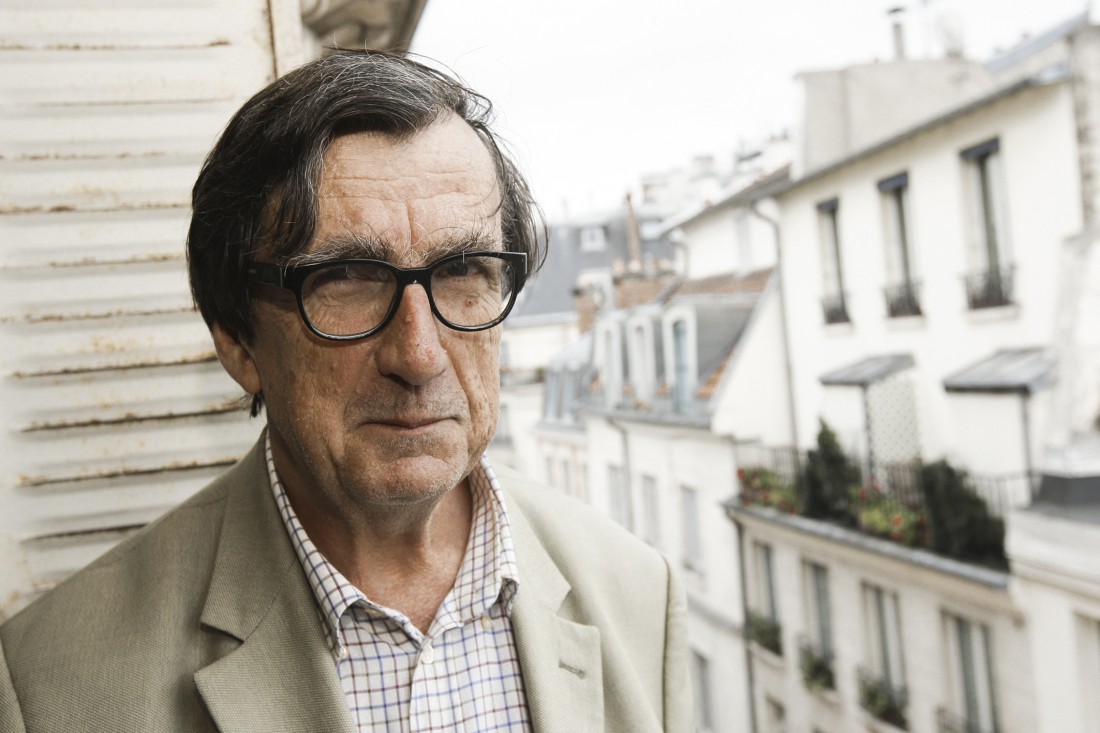
Bruno Latour
In this context, Bruno Latour’s Actor-Network theory (or ANT, recently renamed the actant-rhizome ontology), which is the fundamental theoretical base that defines our approach to artistic exhibitions, adds a very interesting point of view. The Actor-Network theory emerges as a sociological theory on Science and Technology (Latour, 1983), which describes the generation of knowledge as a result of the relationships established between actors. These actors, according to Latour, can be human (e.g.: scientists, technologists, managers, publishers, etc.) and non-humans (research centres, journals, descriptors, patents, etc.). Considering that the network actors can be of any nature, it establishes a kind of flat ontology in which hierarchies are not established. From this point of view, the network ceases to be configured according to the established interactions between individuals or communities according to the dichotomous subject/object, actor/system approach; on the contrary, all the actors in the network act as «mediators» that generate modifications leading to continuous redefinitions.
The Actor-Network theory has proved very useful to describe the complex relationships that are established in the technoscience networks (Echevarría & González, 2009), but is also being used to entirely redefine the thought (Latour, 2005; Bogost, 2012, among others). Despite the complexities that this theory has in itself, which in some cases it seems to be able to be resolved only in the field of intellectual speculation, its logic can also be applied to specific cases to model, analyse and understand cultural phenomena as a set of complex interactions where heterogeneous actors are continually redefined.
Thus, coming to our research subject, we can say that temporary artistic exhibitions, as cultural products generating meanings (cultural, social, political, symbolic), are the result of a series of relationships established between actor-mediators (human and nonhuman) that are constantly being redefined. Our investigation, therefore, is guided by the following questions: What are the actors that are part of the «temporary art exhibitions» phenomenon? Where are they from? How do they connect and interact among themselves? How does it affect the redefinition of the production of meaning networks? In what way are these network (actors and relationships) maintained (stability) or changed (dynamic) in the geo-temporal variable?
The concept of complex networks has joined two other key concepts that operate in the establishment of a new analysis paradigm: scale and complexity. The change of scale operated by the computational systems of extraction and data processing, as well as display models and mapping, allow us to obtain a comprehensive picture of certain phenomena. This change in perspective toward global and comprehensive, is what Franco Moretti (2005, 2013) calls the passage of close reading, the basis so far in the study of humanities (analysis of a set as representative of facts or elements they extrapolated in the interpretation to the overall) to the distant reading (analysis of the whole set). The interesting thing about this approach is that it allows a multiscale perspective: i.e., that at the same time gives us an overview of how cultural phenomena operates and configures, it also allows us to focus on unique and individual aspects, even those that go unnoticed in traditional historiographic readings not forming part of the mainstream, but which, can now make themselves visible, thanks to the potential of data mining to extract data repositories and connect them using complex algorithms. This multiscale approach allows us then, to analyse a phenomenon in its entirety, while still paying attention to the unique, local, individual and/or «marginal» facts.
The combination of the technologies of data mining, network analysis, KDD (Knowledge Discovery in Databases) and graph interpretation has proven to be a powerful tool for the analysis of certain systems of networks and subnetworks, becoming popular for the study of diverse cultural and social phenomena (Scott and Carrignton, 2011).
Nuria Rodríguez Ortega
References cited
Bogost, Ian (2012), Alien Phenomenology, or what it’s like to be a thing (posthumanities), University of Minnesota Press.
Echevarría, J. y González, M. I. (2009), «La Teoría del Actor-Red y la tesis de la Tecnociencia», Arbor Ciencia, Pensamiento y Cultura, n. 738, pp. 705-720.
Latour, B. (1983), «Give me a Laboratory and I Will Raise the World», en Knorr-Cetina, K. and Mulkay, M., Science observed: Perspectives on the Social Study of Science, London: Sage.
Latour, B. (2005), Reassembling the Social: An Introduction to Actor-Network-Theory, Oxford and New York: Oxford University Press.
Moretti, F. (2005), Graphs, maps, trees: abstract models for Literary History, New York: Verso Books.
Moretti, F. (2013), Distant reading, New York: VersoBooks.
Scott, J. and Carrington, P. J. (eds.) (2011), The Sage Handbook of Social Network Analysis, Los Angeles: Sage.
Sieck, W. R., Rasmussen, L. J., & Smart, P. (2010), «Cultural Network Analysis: A Cognitive Approach to Cultural Modeling», en Verma, D. (ed.), Network Science for Military Coalition Operations: Information Extraction and Interactions, Hershey, PA: IGI Global, pp. 237-255.

